
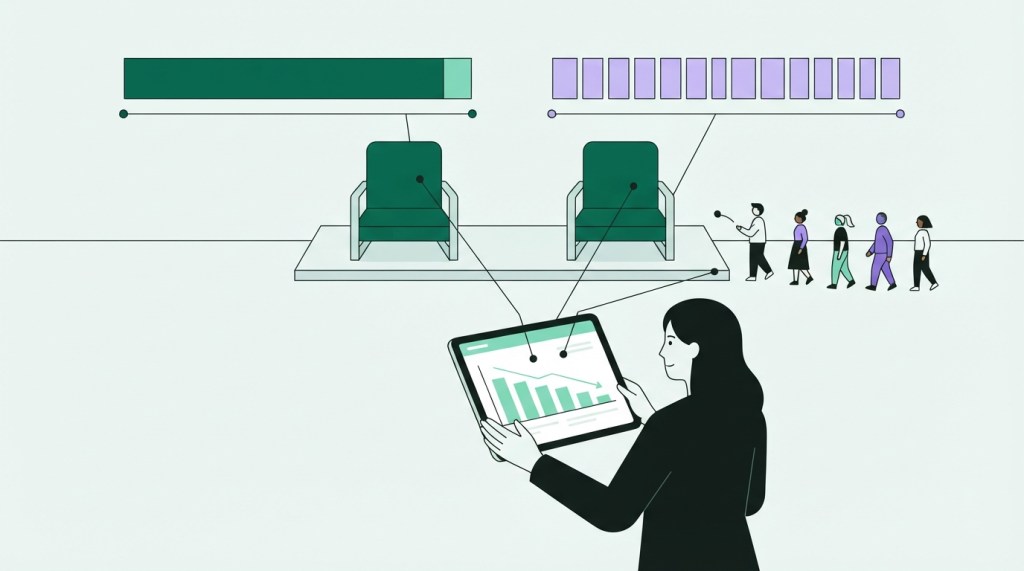
Not long ago, if I wanted to know whether a strategy was working, the path to an answer ran through a data analyst. I’d explain the metrics I cared about, we’d scope the right view, and then I’d wait for the report to be built. In one case, getting the report I needed took a full year.
Today, that same question can be answered in an afternoon.
As a subject-matter expert, I can bring AI the questions I need answered, give it access to the right data sets (uploaded directly or piped in from a data lake), and ask it to build an interactive dashboard or a full presentation that walks me through three things:
- How the data was ingested, so I can check what was included and what was left out
- What the data says against the metrics I care about
- What it means for our strategy, and where we should act
This is where AI shines. It builds a bridge between the people who understand the work and the technical capability needed to analyze it. And data analysts matter more now than ever: their expertise in validation and QA is what makes AI-assisted analysis trustworthy enough to act on.
Here’s the thing: you have to know what to ask
The more organizations I work with, the more I see that alignment on metrics is far from a given. Teams often haven’t agreed on which outcomes they’re driving toward, or which inputs actually move the needle. AI can help you get there, and it works best when the people using it already think that way.
I saw a perfect example of this somewhere I didn’t expect: my eyebrow appointment. (No judgment, please!)
A lesson from the waiting room
The salon I go to only takes walk-ins, and when I arrived, the waiting room was full. Some services take a while, like a full facial at about 30 minutes. Others are quick, like an eyebrow appointment at under 10.
Both technicians were working on facials at the same time, and nearly everyone in the waiting room was there for eyebrows. One technician could have taken the longer services while the other worked through the quick ones, and the line would have kept moving. It’s a classic operations problem.
Now imagine the owner asks an AI tool, “Build me a solution for our wait times.” Depending on the model, the moment and the wording, they might get something useful, or they might get something that sounds smart and misses the real issue. AI is non-deterministic: ask the same broad question twice, and you can get two different answers.
My four-step method narrows that gap considerably. What closes it is an expert who knows the right questions to ask first:
- What’s the goal? Shorter waits, a better customer experience, more services per day, or all three?
- What does success look like, and how will we measure it? Average wait time, services completed per hour, walk-outs per day.
- What are the constraints? Two technicians, walk-ins only, and services that range from 10 to 30 minutes.
- What behavior do we expect? Should quick services ever wait behind long ones during a rush?
With those answers in hand, the request to AI changes completely. The AI now has a defined goal, a way to measure success and the real constraints of the business, so its recommendation is specific and easy to check against the numbers. The right questions turn a gamble into a plan.
Build the foundation first
AI-enabled analysis is only as strong as the infrastructure underneath it. Before you expect AI to drive better decisions, make sure you have:
- Aligned goals and metrics. Leaders agree on what success means and how it’s measured.
- Known inputs. The team understands which actions and behaviors actually move those metrics.
- Accessible, trustworthy data. Clean definitions, reliable pipelines and analysts who validate what AI produces.
- People who know how to ask. Staff trained to frame questions, give context and challenge the answers they get back.
With that foundation in place, AI can supercharge your team’s understanding, and every answer it gives you rests on solid ground.
Invest in your people first. Align them on the metrics that matter and teach them to ask the right questions. That’s when AI becomes a true force multiplier.
This is exactly where I start with every team, whether through an AI Enablement Workshop or a Workflow Automation Sprint, which opens with a design thinking session to define the goal, the metrics and the questions that matter. If your team is ready to turn its data into decisions, let’s talk.

