You know AI output is good enough when you have tested it against a standard you understand well enough to defend. That standard comes from your own expertise, which is why critical thinking matters most when you work with AI.
Here’s the paradox I keep coming back to: AI is great at parsing through information and presenting ideas to you, so it can feel like the hard thinking is already done; however, I believe critical thinking is the skill AI makes MOST important.
Why does AI make critical thinking feel optional?
AI hands you answers that are organized, confident and polished. When you’re new to AI and still getting comfortable with it, that polish can read like proof. I wrote about this in AI Is Not an Easy Button: AI output looks good no matter who is driving.
Looking good is where validation starts.
Where does validation fit in my four-step method?
I use four steps every time I work with AI: Persona, Context, Detailed Prompt and Validation. (I walk through each one in Stop Boiling the Ocean.) I said in a meeting recently that validation is where I spend the second most time. Here’s how my time splits:
- Context: the most time.
- Validation: second.
- Detailed prompt: a close third.
- Persona: the least.
Validation is never optional. Beginners who are still getting comfortable with AI are the most likely to treat it as an extra step, because the output already looks finished.
What does validation look like on a real build?
For Higher Ed Ops Consulting, I built a set of sample apps. Each one shows how we can work together to find opportunities to optimize internal operations. An organization is only as good as its operations; process optimization is how a team keeps up with the times and makes the most of its opportunities.
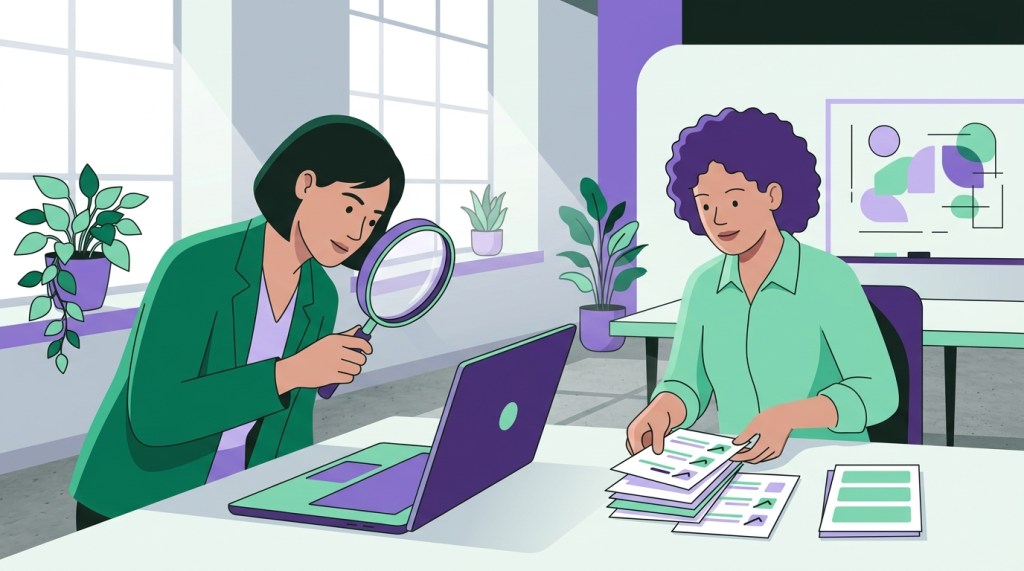
The apps look simple at the outset — but behind them are many hours, and real money, spent running AI agents simultaneously to test and break the apps across many different scenarios (Think: QA & Testing). The goal is to find and fix bugs before a live user ever sees them. And these are just free tools, built to show the work we can do together.
Why go that far? Because an app can look good and smell good and still have a problem hiding in a scenario nobody tried. I can’t abide by that. It took AI and I 20 rounds of testing to get to a place where we feel comfortable with the output, because we’ve taken as far as we can go.
Who decides what “good enough” means?
AI agents can run test after test. Deciding when the work is ready is a human call. That’s where critical thinking comes in.
For my apps, I set the bar high. Deans and program directors use these tools, and to them even a small bug can make the whole app feel broken. So I fix the low-severity issues too.
To make that call, you have to know what good enough looks like for your work. That knowledge comes from your own experience and expertise.
How do you build the judgment to know what’s good enough?
Invest in your own professional development. In a workforce where AI is embedded in everyday work, your judgment may be your key differentiator.
Here’s how I validate AI output:
- Ask AI to show its work. What did it assume? Where is it least confident?
- Check the key numbers against the source.
- Use a second AI for high-stakes work. Give it the same data and context, and ask it to challenge the first answer.
- Make the final call yourself. Would you put your name on it?
For a team, the same question applies at a larger scale: does everyone agree on what good looks like? The free AI Readiness Check is a quick way to see where your team stands. In my AI Enablement Workshop, teams practice all four steps, including validation, on their own real work.
Ready to build validation into how your team works?
If your team is getting comfortable with AI and you want critical thinking built into every step, let’s talk. Book a free 30-minute call.

